Are You Exempt From the Life in the UK Test?
Updated
You are exempt from the Life in the UK Test if you are under 18 or aged 65 or over when you apply, if you have already passed it, or if a long-term physical or mental condition prevents you from taking it and a doctor confirms this on the required form. Everyone else applying for indefinite leave to remain or British citizenship needs a pass.
The four exemptions at a glance
The list is short, and it is the same whether you are applying for settlement or for citizenship. If you do not fit one of these, you take the test.
- You are under 18 on the date you apply
- You are 65 or over on the date you apply
- You have already passed the Life in the UK Test, at any time
- A long-term physical or mental condition stops you taking it, confirmed by a doctor on the required form
Age: under 18 or 65 and over
The age exemption is measured at the date of your application, not the date you arrived in the UK or the date you first thought about applying. Someone who is 64 when they apply takes the test; someone who applies a month after their 65th birthday does not.
Children under 18 are covered automatically. If a child turns 18 while an application is being processed, the exemption is judged on the date the application was submitted, but check the current gov.uk guidance for your route, because timing rules are where applications go wrong.
A previous pass: you never retake it
There is one test, and one pass is valid for both indefinite leave to remain and citizenship. It does not expire. If you passed years ago for settlement and are now applying to naturalise, you do not sit it again.
What you need is proof. Keep the pass notification you were given at the test centre, and use the same identity details on your application that you used when you booked, so the result can be matched to you.
Medical exemption: the form from your doctor
The medical exemption is for a long-term physical or mental condition that prevents you from taking the test. It is not a lower pass mark or extra time; it removes the requirement entirely, and it is granted case by case.
The evidence is a form completed by a doctor. The doctor confirms the condition and explains why it stops you taking the test. Ordinary nerves, a busy work schedule or limited English do not qualify. If you have a diagnosed condition, talk to your GP, who decides whether they can complete the form, and then submit it with your application.
Not exempt? Here is what the test asks of you
Most applicants are not exempt, and the requirement is the same for all of them: 24 multiple-choice questions in 45 minutes, with 18 correct answers to pass, drawn from the official handbook. You book it on gov.uk for £50.
The Life in the UK Test 2026 Pro app covers the handbook material in 10 chapters and 66 lessons, with 550 practice questions and 22 timed mock tests. The first four chapters and two mock tests are free, so you can find out how far from 18 you are before spending anything.
Where to start once you know you must take it
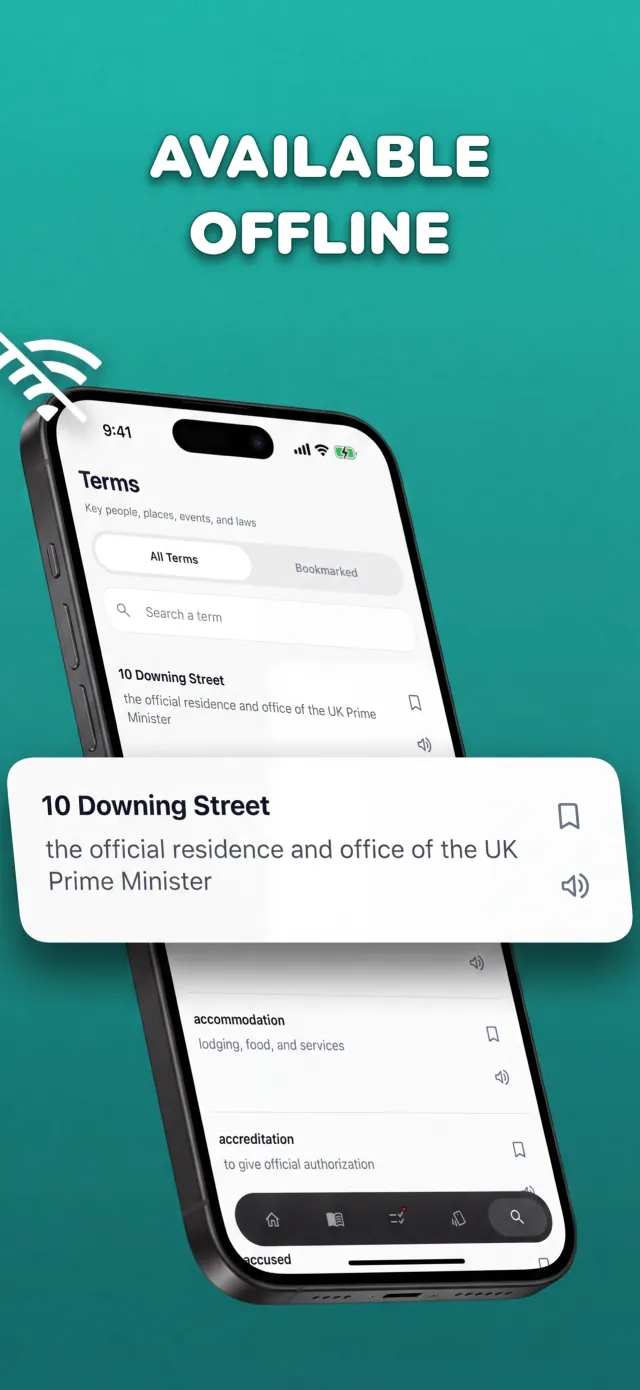
The vocabulary is the first hurdle for many candidates. The handbook uses terms like constituency, jury service and devolved administration without pausing to define them, and a question that hinges on one of those words is easy to lose.
Start with the terms, then the chapters, then timed practice. Reading a definition once and hearing it pronounced does more for recall than skimming the same paragraph three times.
Common misunderstandings about who is exempt
Because the exemption list is short, a lot of hopeful reasoning gets applied to it. None of the following removes the requirement.
- Being over 60 but under 65; the line is 65 on the date of application
- Having lived in the UK for ten, twenty or thirty years
- Having a British partner or a child born in the UK
- Having passed an English language test; that is a separate requirement
- Having failed the test several times; a fail does not open an exemption route
- Coming from an English-speaking country
Frequently asked questions
Does test anxiety count as a medical exemption?
Ordinary nerves do not. The medical exemption covers a long-term physical or mental condition that prevents you from taking the test, and a doctor has to confirm it on the required form. If anxiety is a diagnosed condition that affects you in that way, speak to your GP, who decides whether they can complete the form.
Is the English requirement also waived if exempt?
Usually, yes, for the age and medical exemptions, because they apply to the whole knowledge of language and life requirement. A previous pass of the Life in the UK Test is different: it only covers the Life in the UK part, so you still need to meet the English language requirement separately. Check the guidance for your specific application on gov.uk.
Related guides
How to Book the Life in the UK Test (2026)
Step-by-step gov.uk booking, the £50 fee, priority surcharges, and how to avoid third-party scam sites that charge more for the same test.
Read guideLife in the UK Test: ILR vs Citizenship
One test, no expiry: why your ILR pass carries straight over to citizenship, what to keep as proof, and when to sit it if you are heading for both.
Read guideIs the Life in the UK Test Hard? (2026 Pass Rates)
First-attempt pass rates sit around 70 to 78 percent. What makes the test feel hard, which question types trip people up, and how to beat the average.
Read guide