Industry and Urbanisation
Free preview · 4 of 10 sections
The Industrial Revolution
Here are eight important facts about the Industrial Revolution, which took place during the 18th and 19th centuries:
- Before the 18th century, agriculture and small-scale industries, such as cloth-making, were the main sources of employment in Britain.
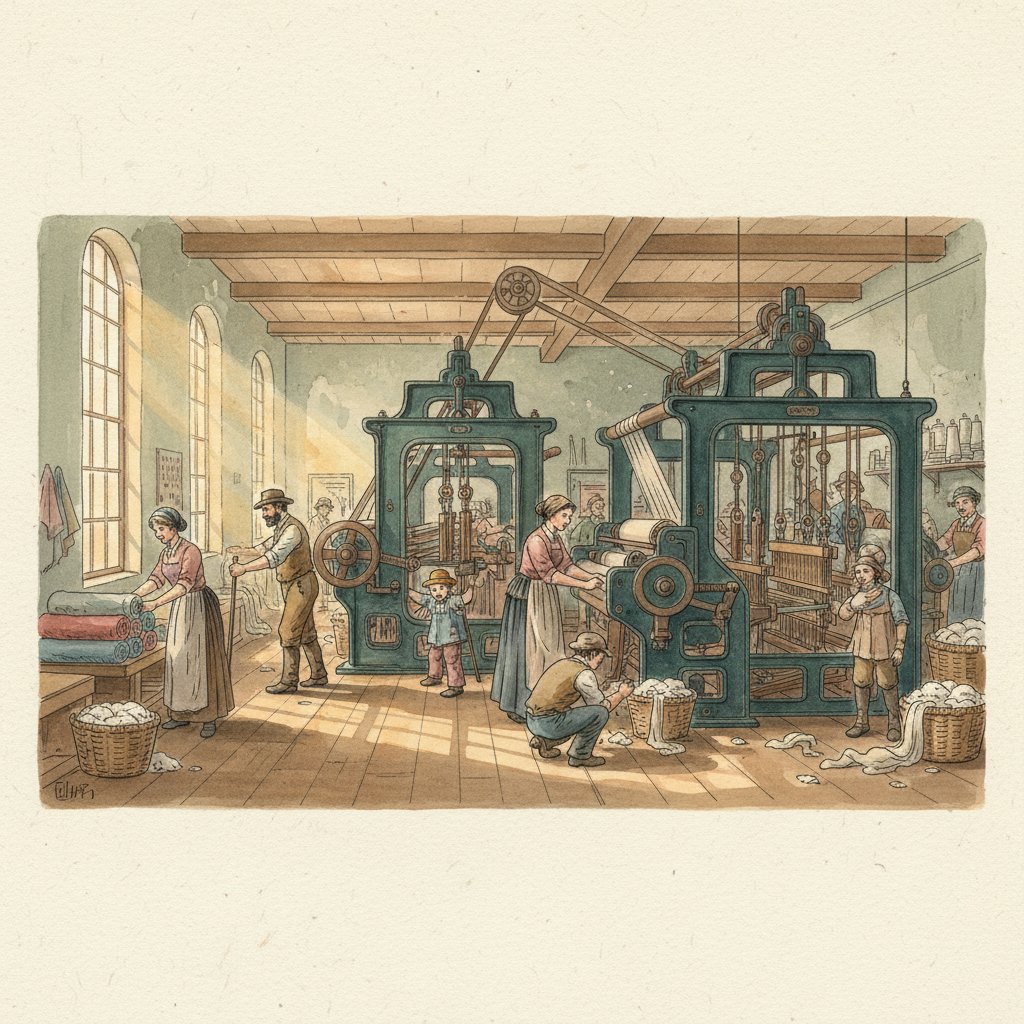
- Both agriculture and the manufacturing of goods became mechanised, a major shift in working practices.
- The development of water power and, later, steam power drove the Industrial Revolution. The shift led people to move to towns and cities for factory work.
- Major infrastructure developments took place, including the building of canals and railways.
- Richard Arkwright played a central role in the revolution, inventing textile machinery and introducing efficient, profitable ways of running factories.
- The invention of the Bessemer process (named after its inventor, Sir Henry Bessemer) allowed high-quality steel to be produced, which transformed shipbuilding and railway construction.
- Manufacturing became the main source of employment, replacing agriculture and traditional small industries.
- Canals were constructed to connect industrial areas to towns, particularly across the Midlands and the north of England.
- During this period, both adults and children often worked in poor conditions and for long hours.