Life in the UK Test Pass Mark: How Many Do You Need Right?
Updated
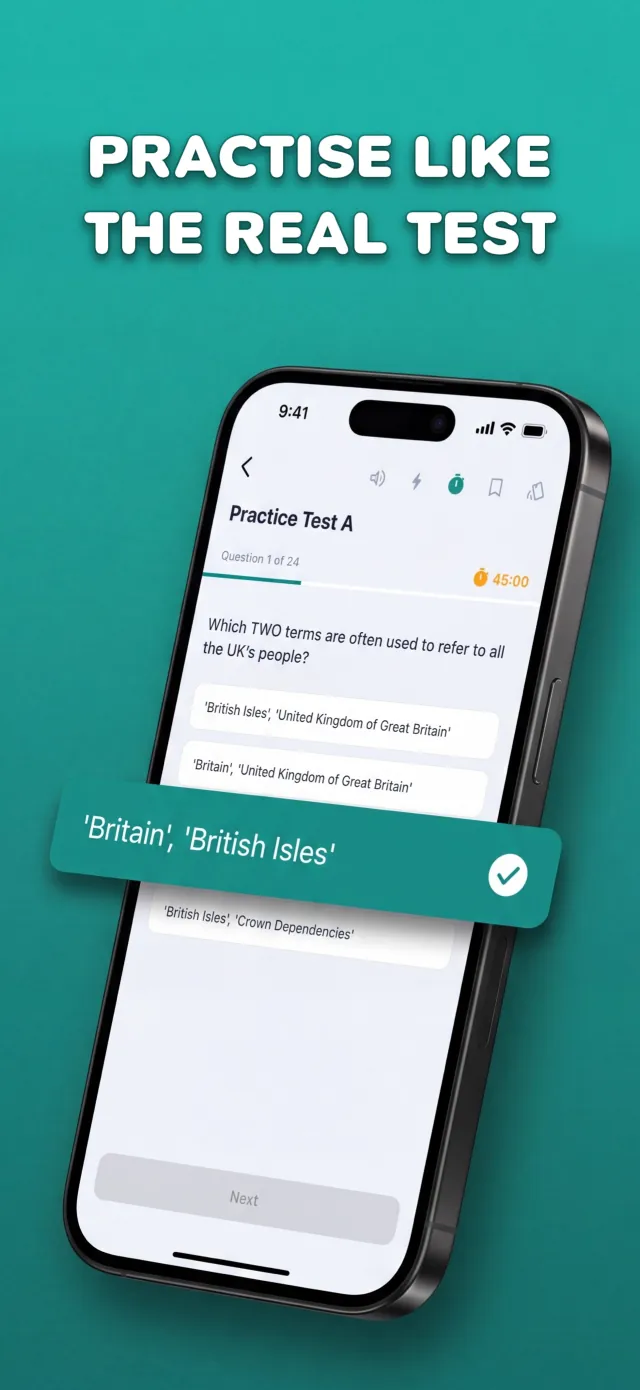
You need 18 correct answers out of 24 to pass the Life in the UK Test, which is a pass mark of 75%. You get 45 minutes, every question is multiple choice, and each one is worth a single mark, so you can afford six mistakes and no more.
The test format in numbers
The Life in the UK Test is sat on a computer at an official test centre. Every question comes from the official handbook, Life in the United Kingdom: A Guide for New Residents, and the current 3rd edition is the only source the questions draw on.
The numbers are fixed and have been for years, so there is no guesswork about what you are walking into.
- 24 questions, all multiple choice
- 45 minutes, which works out at under two minutes per question
- 18 correct answers to pass, a pass mark of 75%
- £50 per attempt, booked through gov.uk
- One pass covers both indefinite leave to remain and citizenship, with no expiry
How the 75% pass mark works in practice
There is no partial credit and no negative marking. A correct answer is one mark, a wrong or blank answer is zero, and 18 marks is the line. Because a blank scores the same as a wrong guess, you should answer every question, even the ones you are unsure about.
The questions come in a few shapes: choose one answer from four, decide whether a statement is true or false, pick the correct statement of two, or select two answers from four. A two-answer question is still worth one mark, and you only get it if both selections are right, which is why that format catches people out.
Nobody sees a percentage on the day. The pass mark is quoted as 75% because 18 divided by 24 is 0.75, but the test is scored in whole questions.
What a passing attempt looks like
Picture a candidate who has read all ten chapters once and then taken timed practice tests until they score 21 or 22 out of 24 most of the time. On the day they lose a mark to a date they half remembered, another to a two-answer question where they picked one right and one wrong, and a third to a name they had never revised. They finish with 21 and pass comfortably.
Now picture someone who read the book twice, never timed themselves, and sits down feeling confident. They drop the same three marks, then three more on questions they would have got right in a quiet room, because the clock and the unfamiliar screen make them rush. They finish with 18, a pass by a single question, and the difference between the two people was the practice, not the reading.
The 45 minutes is generous for most candidates. The risk is rushing, not running out of time, so read every option before you click.
Check your score against the pass mark before you book
The only way to know whether 18 of 24 is within reach is to sit the format under the real conditions. The Life in the UK Test 2026 Pro app has 22 timed mock tests of 24 questions each, with the same 45-minute countdown and a pass or fail result against the 75% line at the end. The first two mock tests are free, along with the first four chapters.
Take three mock tests in a row. If all three come in at 21 or above, book the real test. If any of them lands below 18, you have found a gap while it is still cheap to fix.
Why 24 questions feel harder than the number suggests
Twenty-four questions sounds small until you remember they can come from anywhere in ten chapters and 66 lessons. One test might lean on the history chapters, the next on government and law. You cannot predict the mix, so you cannot skip a chapter and hope.
The questions are also specific. They ask for the year something happened, the name of a person, or the number of members in a body, and the wrong options are chosen to look plausible. Recognising a topic is not the same as recalling the exact fact.
Common mistakes that cost the six spare marks
Most failed attempts are not spread evenly across the paper. They cluster around a handful of habits that practice tests expose quickly.
- Selecting only one answer on a question that asks for two
- Confusing similar dates, such as the two world wars or the two Reform Acts
- Skipping the shorter chapters because they feel less important
- Leaving a question blank instead of taking the best guess
- Changing a correct first instinct after re-reading the options
- Reading the handbook without ever testing recall
After the result
You receive your result at the test centre when you finish. If you pass, keep the pass notification safe, because the same pass is used for indefinite leave to remain and later for citizenship, and it never expires.
If you fall short, nothing happens to your current status. You wait at least seven days, book again on gov.uk, pay another £50 and sit the test again. Most people who fail once pass on the next attempt after doing the practice they skipped the first time.
Frequently asked questions
Does every wrong answer count the same?
Yes. Each of the 24 questions is worth one mark, a wrong or blank answer scores zero, and there is no negative marking. A two-answer question is still one mark and you only earn it if both selections are correct. You need 18 marks in total to pass.
Can you see your score before leaving the test centre?
You are given your result at the test centre straight after you finish, so you leave knowing whether you passed. Do not expect a question-by-question breakdown of what you got wrong. Timed mock tests before the day are the only reliable way to see where your marks are coming from.
Related guides
How to Pass the Life in the UK Test First Time
The study plan, mock-test strategy and test-day tips that get most candidates past 18 out of 24 on their first attempt, without a second £50 fee.
Read guideIs the Life in the UK Test Hard? (2026 Pass Rates)
First-attempt pass rates sit around 70 to 78 percent. What makes the test feel hard, which question types trip people up, and how to beat the average.
Read guideLife in the UK Test: Book vs App
The official handbook is the source of every question. What it does well, where it leaves you short, and how an app closes the gap to 18 out of 24.
Read guide